Paving laid by

Tan clay paver patio with a darker header course under a flat alfresco roof, with an outdoor dining table, at a Canberra brick home

Patios and Alfresco Areas

Paved Outdoor Entertaining Areas in Canberra

A paved patio or alfresco floor from Prime Paving Canberra is laid level, with enough fall for rain to run off, at homes across Canberra and the nearby towns. Whether you're paving a new patio, updating an alfresco area or creating a space for outdoor dining and barbecues, we can help you choose a suitable surface and laying method.

Get an Entertaining Area Quote

The Person Who Measures Your Job Lays It.

What Needs Paving? (Pick Any)

Your details are only used to reply about your job. See our privacy policy and terms.

We work with clay pavers, travertine and porcelain, offering different colours, finishes and installation options to suit your home, outdoor space and budget.

The person who measures your entertaining area is the person who lays it.

Our Entertaining Area Paving Services

  • New patio and alfresco paving
  • Replacing old paving, concrete or turf
  • Clay paver, travertine and porcelain installations
  • Base preparation for dry-laid and wet-laid paving
  • Paving edges, cutting and joint finishing

Paving Materials

Which Pavers Suit an Outdoor Entertaining Area?

Choosing the right pavers is one of the most important decisions when planning an outdoor entertaining area. The material affects the appearance, installation method, maintenance and overall cost of the project.

Prime Paving Canberra works with three main paving materials, each offering different benefits for patios, alfresco areas and outdoor living spaces.

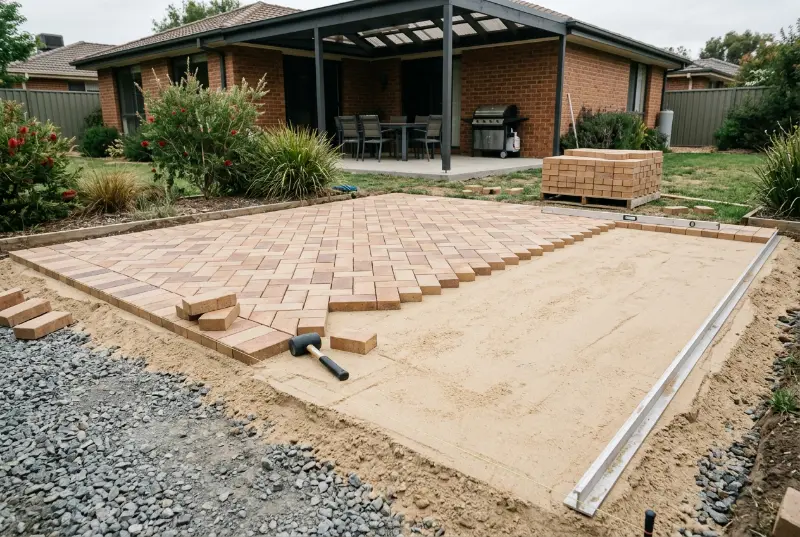
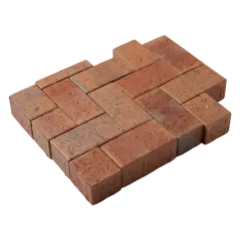
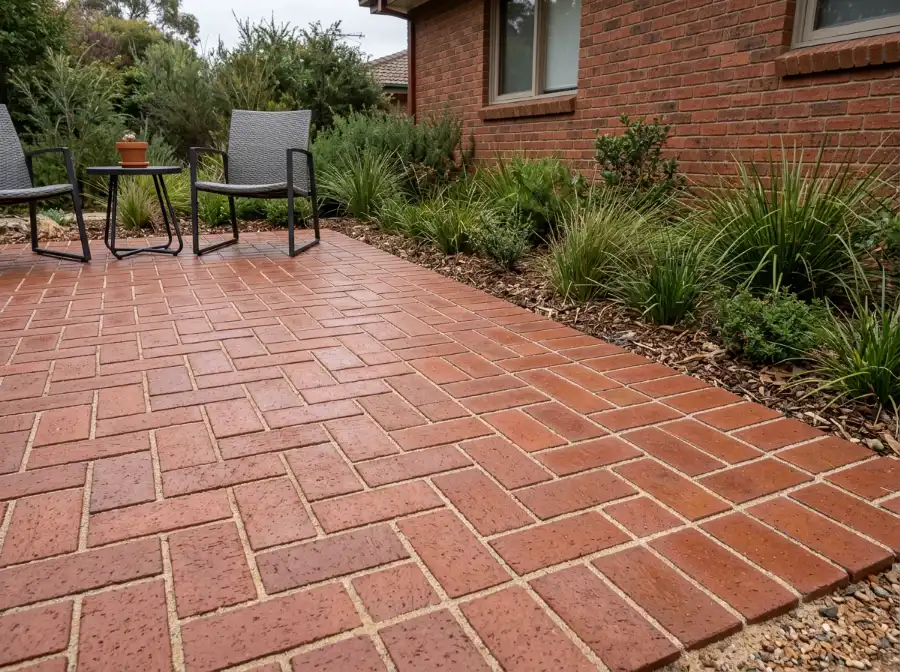
Red-brown clay pavers in herringbone on a small backyard patio beside a native garden bed01
Dry Laid

Clay Pavers

Clay pavers are a popular choice for patios and outdoor entertaining areas, with a wide range of colours, sizes and laying patterns available.

Their natural, earthy appearance works particularly well with traditional brick homes, although different colours and patterns can also complement modern outdoor spaces.

Clay pavers are dry laid on bedding sand over a compacted road base, and individual pavers can be lifted and relaid if repairs are needed.
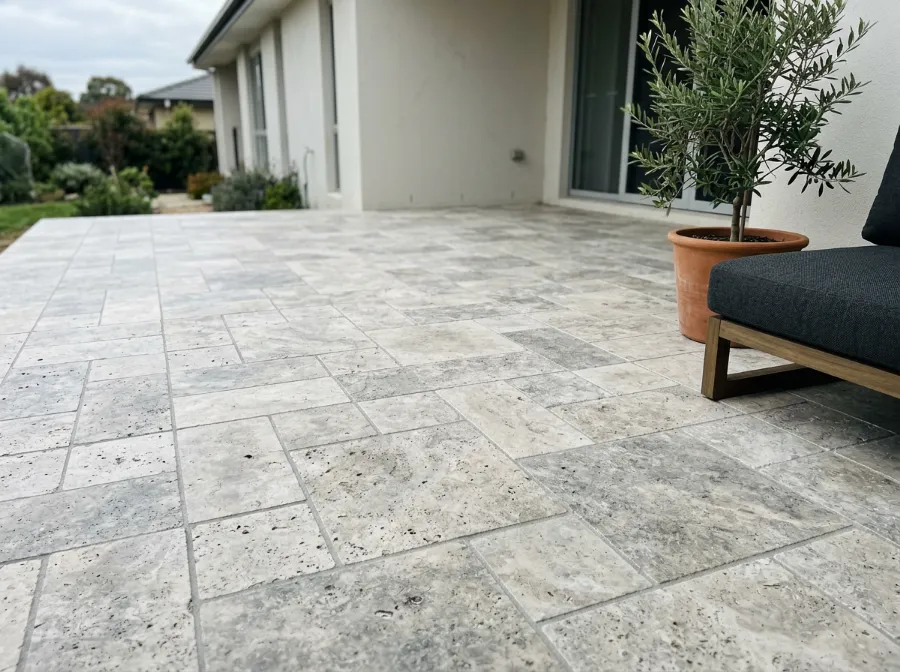
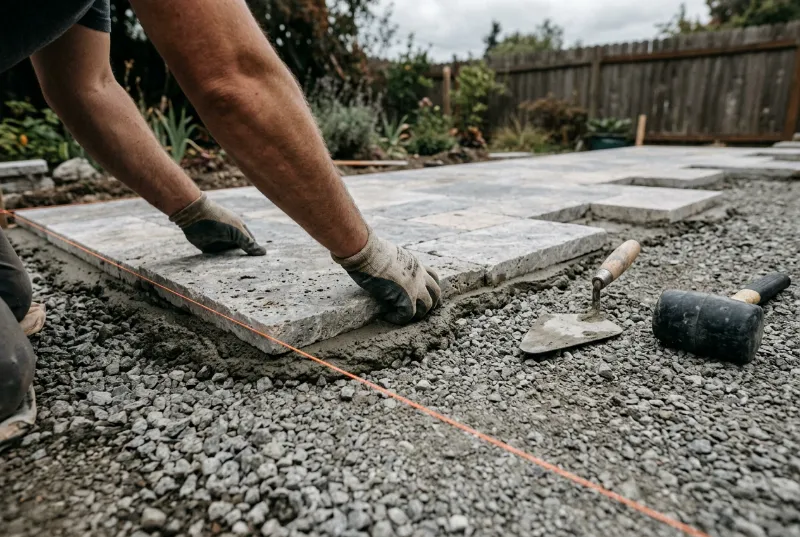
Honed silver travertine pavers laid in a French pattern on a backyard patio02
Wet Laid

Travertine Pavers

Travertine is a natural stone that gives outdoor entertaining areas a warm, understated appearance.

Available in colours such as ivory, cream and beige, travertine can suit both contemporary and traditional homes. Honed travertine has a smooth, matt appearance, while other finishes offer different surface textures.

Travertine is laid in mortar. As a natural stone, its surface finish, porosity and ongoing care are worth thinking about before you choose it.

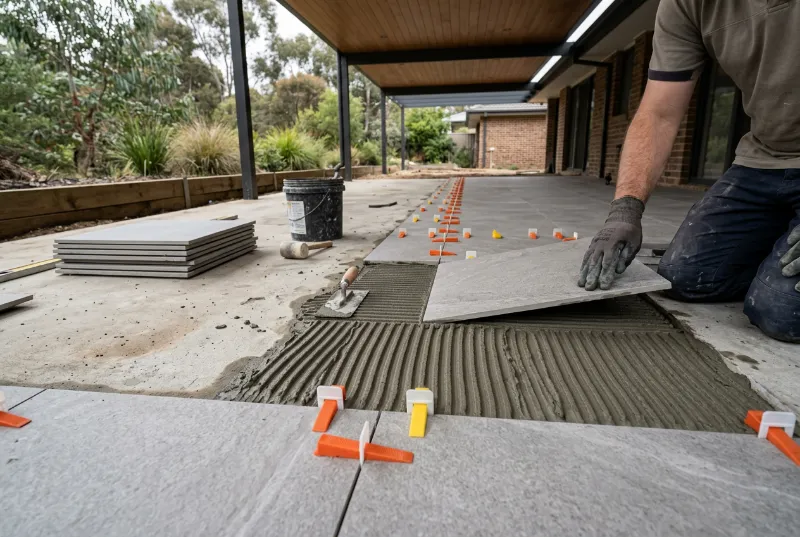
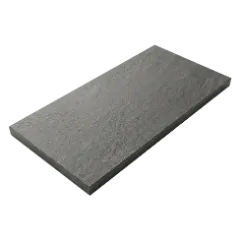
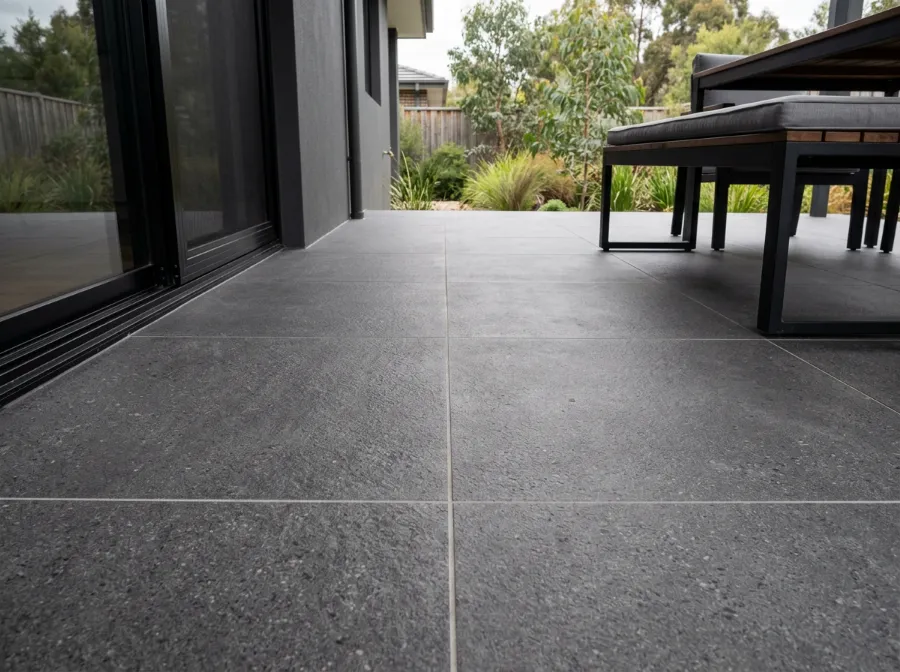
Large charcoal concrete-look porcelain pavers on an alfresco patio beside a black sliding door03
Wet Laid

Porcelain Pavers

Porcelain pavers offer a clean, contemporary finish for patios and alfresco areas.

They are available in a wide range of colours, sizes and designs, including finishes that resemble natural stone or concrete.

Outdoor porcelain pavers are generally low maintenance and resistant to staining, although performance depends on the product. Porcelain is laid in mortar on a prepared base, and the product you choose must suit outdoor use.

Discuss Your Paver Options

How It Is Built

Dry-Laid or Wet-Laid Paving: How Your Patio Is Built

The finished appearance of an entertaining area is important, but what sits underneath the pavers matters just as much.

The right method depends on the paving material, ground conditions, drainage, finished levels and how the area will be used.

Clay Pavers

Dry-Laid Paving on Road Base and Sand

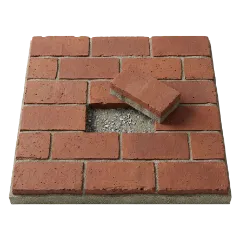
Dry laying is how clay paver patios and entertaining areas are built. The ground is dug out and compacted, a crushed rock road base goes down and is compacted, and the pavers are laid on a bed of sand.

A header course, a border row of pavers, locks the pattern in, and a mortar haunch, a strip of mortar along the outside edge, holds the edges. Polymeric sand, jointing sand with a binder in it, is swept into the gaps.

Individual pavers can be lifted and relaid later if they ever need to be.

Travertine and Porcelain

Wet-Laid Paving on Compacted Road Base

Wet laying sets travertine and porcelain in mortar, so the paving is rigid rather than loose.

For suitable products, the pavers are laid in mortar on 100 mm of compacted road base. For the right job this is often the more cost effective way to wet lay, because no slab is needed.

Travertine and Porcelain

Wet-Laid Paving on a Concrete Slab

A concrete slab gives a stable surface for mortar-set paving. Travertine and suitable porcelain can be laid in mortar over a slab that is in good condition.

Before paving, the slab needs to be checked for its condition, levels and drainage. Where an existing slab is unsuitable, more preparation or replacement may be needed.

Ask Which Method Suits Your Area

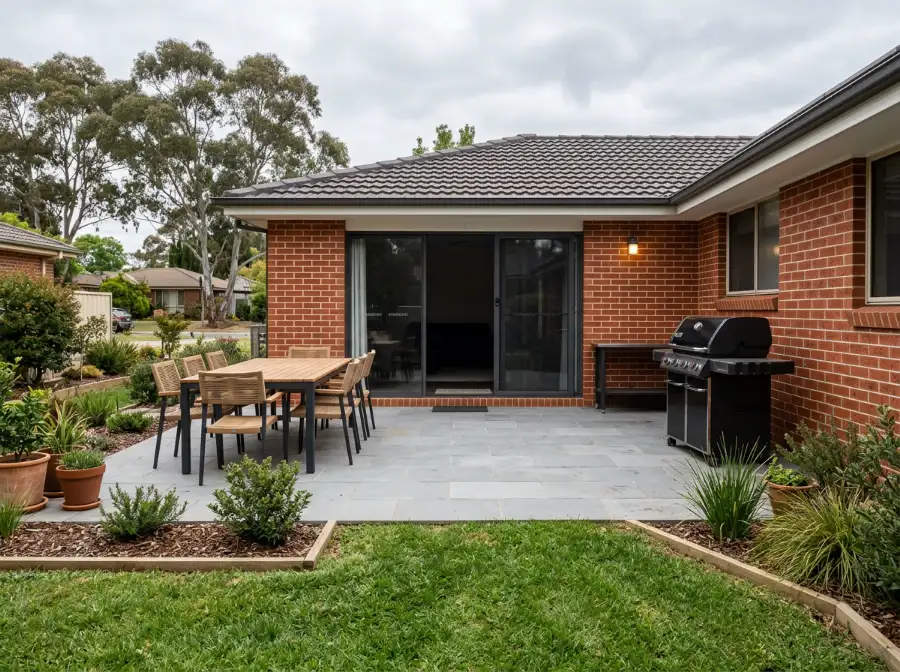
Paved alfresco area with an eight-seat dining table, room to walk around it and paving flush with the door

Planning Your Area

Planning an Outdoor Area You'll Use

A well-planned outdoor entertaining area should suit the way you use your backyard. Before choosing the paving or finalising the layout, think about where furniture will sit, how people will move around and how the new paving meets your home.

  1. 01

    Allow Enough Room for Outdoor Furniture

    Think about the size of your outdoor dining table, chairs, barbecue and any other furniture you plan to use, and leave room for chairs to be pulled out and for people to move around them.

    A large paved area isn't always necessary. Getting the proportions right can make a smaller patio just as practical for everyday use.

  2. 02

    Consider How the Paving Connects to Your Home

    Finished paving levels need to suit existing door thresholds, drainage points and surrounding surfaces.

    If you're extending an existing patio or alfresco area, the new paving should also work with the surfaces next to it and any paths through the backyard.

    See our paths, steps and courtyard paving
  3. 03

    Plan for Drainage

    Paving needs to shed rainwater so it does not sit on the surface or run towards the house.

    This usually means setting the paving to a slight slope, called a fall, so water runs to a suitable drainage point. The fall is worked out with the surrounding ground levels, existing drains and the finished height of the paving.

Talk Through Your Outdoor Area

Our Process

How We Pave an Outdoor Entertaining Area

The process changes a little between dry and wet laying, but the main stages follow the same order.

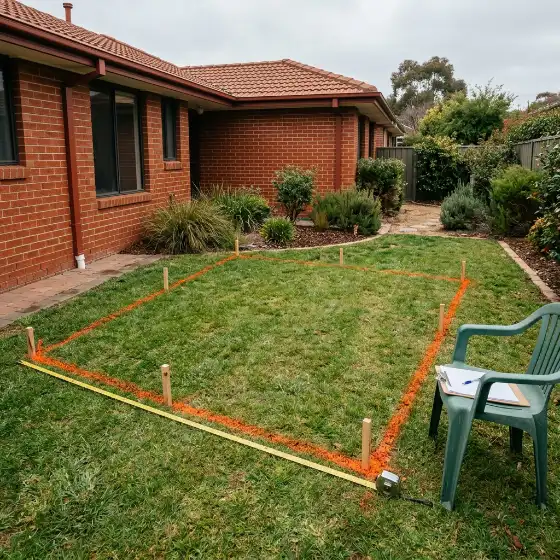
  1. Backyard marked out with paint lines and pegs for a new patio01

    Measure and Assess the Area

    We measure the area and talk through the paving material and layout, looking at the existing surface, access, ground, drainage and finished levels. An approximate size is enough to enquire.

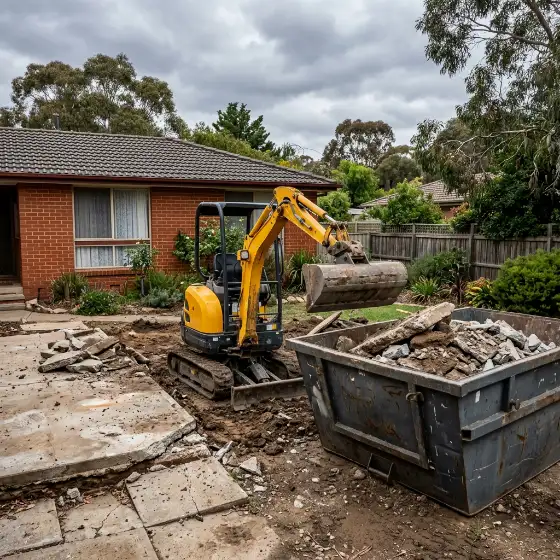
  2. Small excavator lifting old concrete into a skip bin02

    Remove the Existing Surface

    Where needed, old concrete, paving or turf is removed to make way for the new paving. Removal is included in the quote.

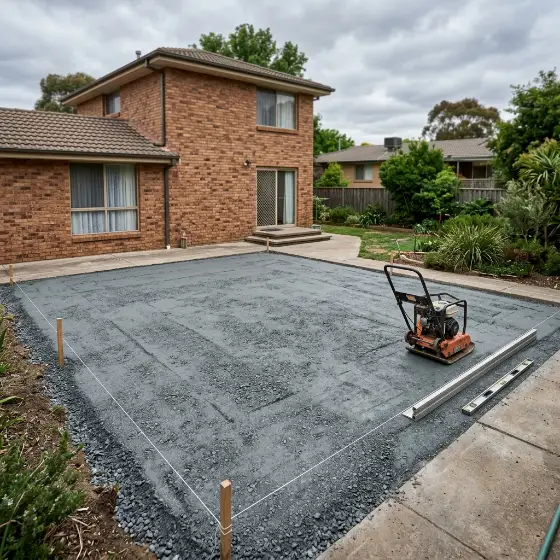
  3. Compacted road base for a new patio with string lines and a plate compactor03

    Prepare the Base

    For dry laying, a crushed rock road base is laid and compacted before the bedding sand goes down. For wet laying, the base is prepared to suit the mortar and the paver.

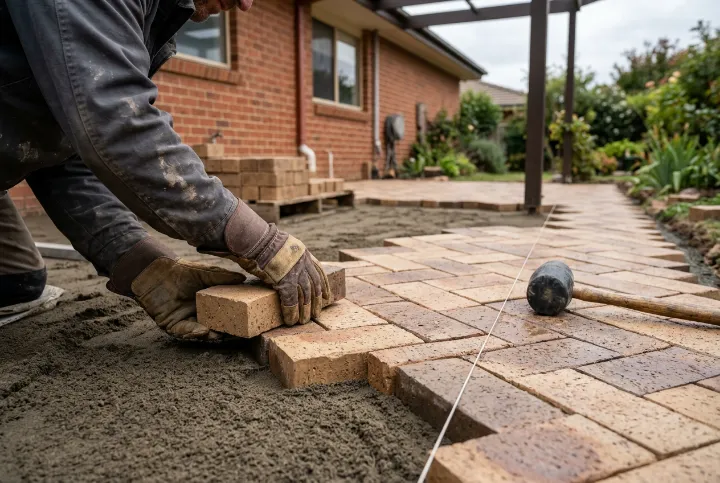
  4. Gloved hands setting tan clay pavers onto screeded bedding sand for a new patio beside a pergola post, with a string line and rubber mallet04

    Lay the Pavers

    The pavers are laid in the chosen pattern, with attention to alignment and spacing, and cut to fit around walls, posts and corners.

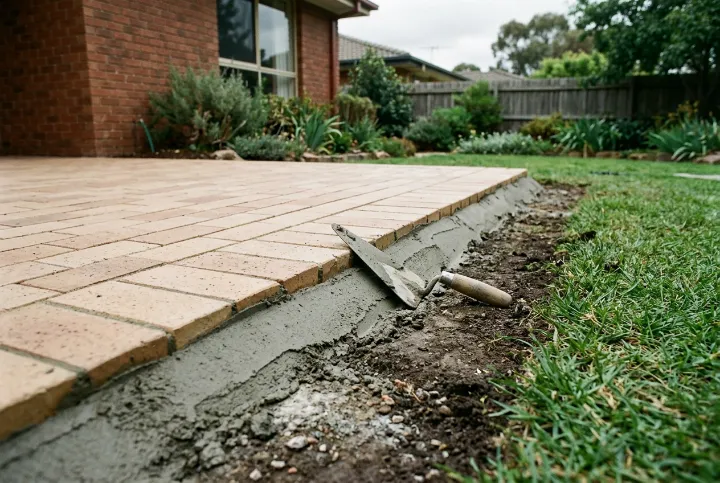
  5. Header course of tan clay pavers along a patio edge with a fresh mortar haunch troweled against the lawn05

    Secure the Edges

    On dry-laid clay paving, a header course and a mortar haunch hold the edges so the paving does not creep.

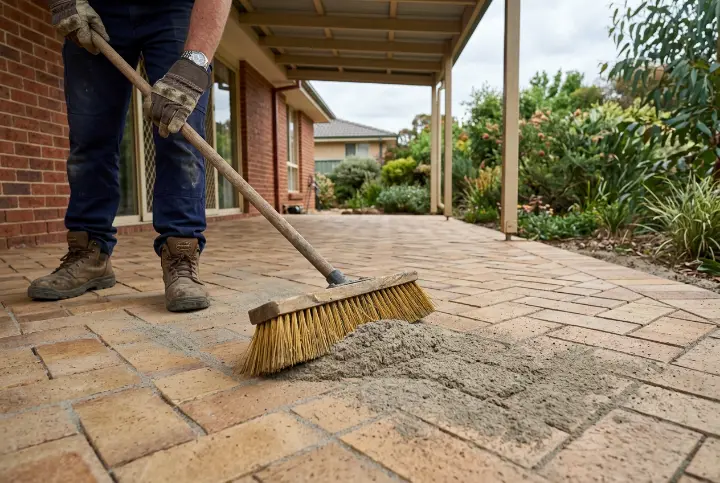
  6. Polymeric sand being swept with a yard broom into the joints of a new clay paver patio under an alfresco roof06

    Finish the Joints

    Dry-laid pavers get polymeric sand swept into the joints. Mortar-set stone or porcelain gets a joint finish that suits it. The area is then cleaned and checked.

Book a Measure and Quote

Entertaining Area Costs

Entertaining Area Paving Costs in Canberra

The cost depends on the size of the space, the material and the work needed to prepare and lay it. A straightforward patio on level, accessible ground needs less preparation than an area with old concrete, tight access or big changes in level.

  • Size of the Area

    Larger areas need more pavers, base and time. Small areas can still involve detailed cutting.

  • Choice of Paving Material

    Clay, travertine and porcelain vary in price by product, size, finish and supplier, and the material decides the laying method.

  • Dry-Laid or Wet-Laid

    Each method uses different materials and labour. Mortar-set paving, and jobs that need a slab, involve more work than a simple dry-laid patio.

  • Removing Existing Surfaces

    Taking out old concrete, paving or turf adds digging, disposal and ground preparation.

  • Shape, Pattern and Cutting

    A rectangle is simpler to pave than an area with corners, curves, steps or posts. Detailed patterns take longer.

  • Access to the Backyard

    Narrow side paths, steps and steep ground affect how materials and equipment get in.

Request a Measured Quote

Every outdoor entertaining area is different. Tell us roughly how big the area is, what surface is there now and where your property is, and we'll arrange the next steps towards a quote.

Get an Entertaining Area Quote

Canberra Conditions

Outdoor Paving That Suits Canberra's Climate

Canberra's average July minimum at the airport is just below zero, at -0.1°C (Bureau of Meteorology), so frosty mornings and wet winters are part of planning an outdoor area here. Choosing suitable pavers, preparing the base properly and allowing for drainage all help paving last.

-0.1°CAverage July minimum, Canberra Airport (Bureau of Meteorology)
  • Proper Base Preparation

    The base supports the finished paving. Depending on the method, that means digging out, compacted road base and bedding sand, or a suitable concrete slab. Poor preparation is a common cause of movement, sinking and uneven paving.

  • Pavers With Suitable Slip Resistance

    Entertaining areas get rain and sometimes frost, so grip matters. Outdoor pavers can carry a slip rating under Australian Standard AS 4586; on the wet pendulum test the classes run from P0 to P5, and a higher class means more tested grip. The right rating depends on where the paving goes, its slope and how it is used.

  • Finishes Made for Outdoors

    When comparing porcelain or travertine, check that the finish you like is made for outdoor use and suits where it will be laid.

Ask About Paving for Your Yard

Existing Patios

Replacing Old Patio Paving or Concrete

If an existing patio is cracked, sunken, uneven or no longer suits your home, replacing it can make the space better to look at and better to use.

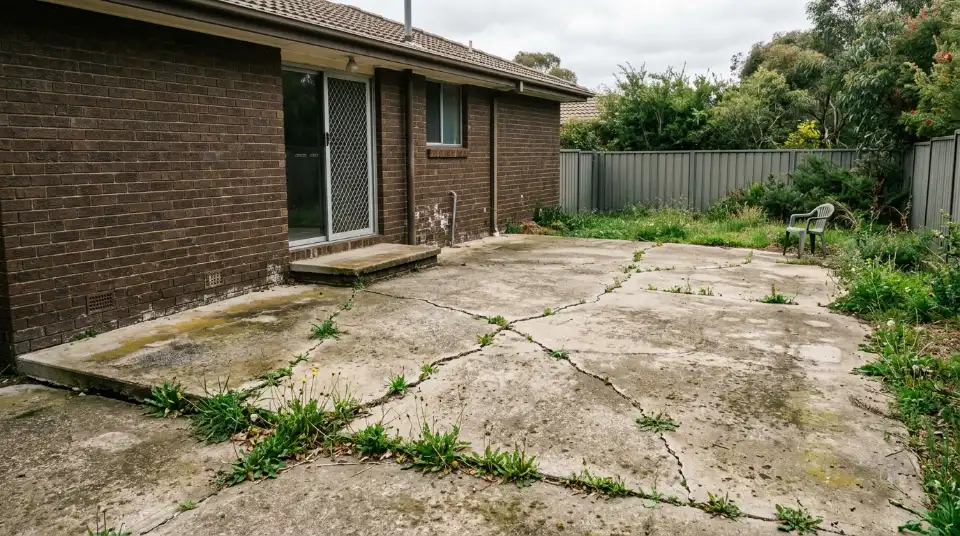
Old cracked concrete patio with weeds growing in the cracks behind a brick home with a sliding door
Option 1

Replacing an Old Concrete Patio

An old concrete patio can be removed and replaced with new paving. Depending on the slab and the paver, a sound slab may also be usable as the base for wet-laid paving; its condition, drainage and levels decide which way to go.

Option 2

Repairing or Replacing Uneven Pavers

Pavers go uneven through ground movement, poor base preparation or a failing base. Where they are still in good condition they can often be lifted and relaid once the cause is fixed. If they are damaged, or you want a different look, new paving may be the better option.

Ask About Replacing Your Patio

Entertaining Area Questions

Entertaining Area Paving Questions

Have a Question About Your Outdoor Entertaining Area?

Ask Your Question on the Contact Page
01How Much Does It Cost to Pave an Outdoor Entertaining Area in Canberra?

It depends on the size of the area, the pavers, site preparation, access and the laying method. Removing existing concrete or paving also affects the price. We measure each area and quote on the work involved.

02What Are the Best Pavers for an Outdoor Entertaining Area?

Clay pavers, travertine and porcelain are all worth considering. Clay gives a warm, traditional look, travertine a natural stone finish, and porcelain suits modern outdoor spaces. The best choice depends on your budget, the look you want, upkeep and how the area is used.

03Should I Choose Clay Pavers, Travertine or Porcelain for My Patio?

Clay pavers are dry laid and can be lifted one at a time for repairs. Travertine has the natural variation of stone but may need more care. Porcelain gives a consistent finish and is generally low maintenance. Each is laid differently, so compare the preparation as well as the product.

04Do Outdoor Tiles Get Slippery When Wet?

Some outdoor surfaces can be slippery when wet, especially finishes not made for outdoors. Outdoor pavers and tiles can carry a slip rating under AS 4586. Check the product suits your patio or alfresco area, including whether it gets rain and how much it slopes.

05Can You Pave Over an Existing Concrete Patio?

Travertine or suitable porcelain can sometimes be laid over an existing slab if the slab is sound and its levels, drainage and surface are right. Cracked or unstable concrete may need more preparation, or replacing, first.

06Can Outdoor Paving Sink or Become Uneven Over Time?

Yes. Paving can move or settle through ground movement, drainage problems, a poorly prepared base or a failing base. Proper preparation and the right laying method reduce the risk, although no outdoor paving is completely immune to movement.

07Should a Patio Be Laid Dry or in Mortar?

It depends on the paver. Clay pavers go down dry, on compacted road base and sand. Travertine and porcelain are set in mortar, which holds them rigid. Which suits your patio comes down to your budget, the paver you like and where it's going.

Entertaining Area Quotes

Get a Quote for Your Outdoor Entertaining Area

Planning a new paved patio, updating an alfresco area or replacing an old outdoor surface? Prime Paving Canberra lays clay, travertine and porcelain paving across Canberra, Yass, Goulburn, Braidwood and Cooma.

Tell us where your property is, roughly how big the space is and what you'd like to achieve.

Planning an Outdoor Area? Call (02) 6189 4970

Request Your Entertaining Area Quote

What Needs Paving? (Pick Any)

Your details are only used to reply about your job. See our privacy policy and terms.

Call NowGet a Quote